ChatGPT announces advertising: is free organic traffic over?
Published on October 18, 2026
Trends and News
ChatGPT has started testing advertising inside conversations, and the question every clinic owner is asking is: no, advertising doesn't end free organic traffic, but it changes the rules of the game. Those who relied only on the luck of being cited now need a strategy, because attention inside AI will also be contested with money.
At Bincoo, we monitor ChatGPT's answers about thousands of clinics, and this announcement is the official milestone that the era of 'ownerless' recommendations is over: now there is a market.
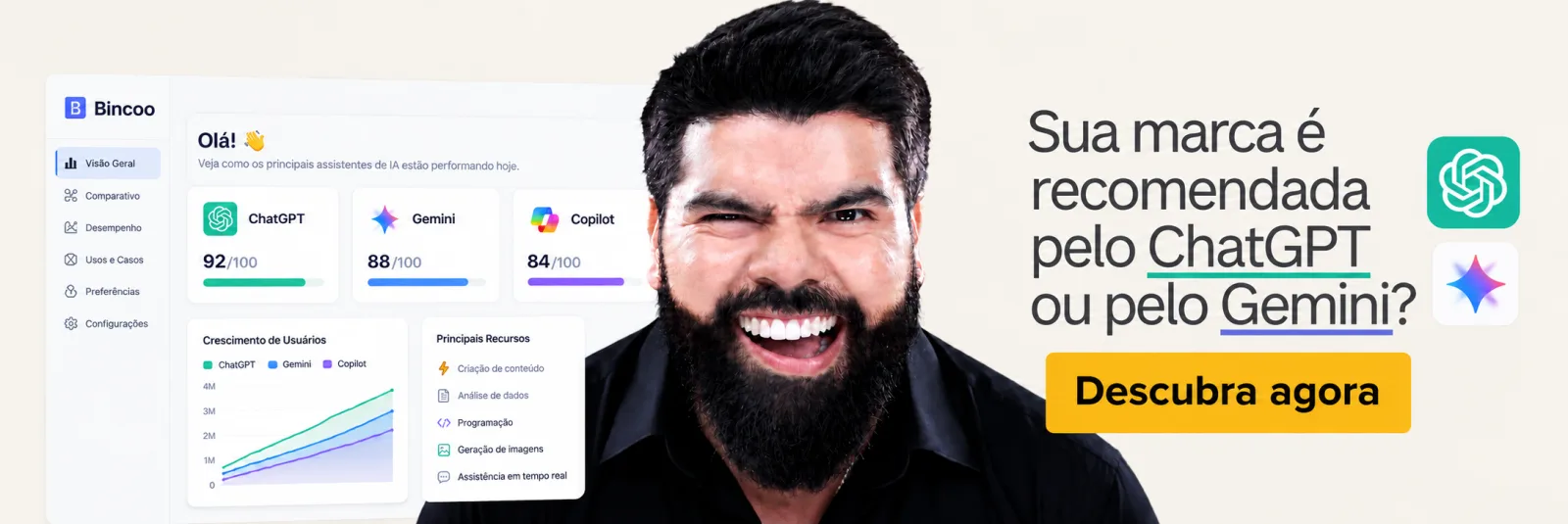
More than 10,000 companies already use Bincoo to be recommended by ChatGPT, Gemini and other platforms.
What was announced
OpenAI began displaying sponsored suggestions in certain ChatGPT conversations, always identified as ads and separated from the model's answer. The format resembles the early days of Google ads: discreet, contextual, and based on what the user asked.
The point almost nobody noticed: the ad appears when the user shows commercial intent ('best implant clinic near me'), exactly the moment when organic recommendation is worth the most.
Organic vs paid: the math that changes
| Criterion | Organic recommendation | Sponsored ad |
|---|---|---|
| Cost per result | Falls over time (owned asset) | Rises with competition |
| Patient trust | High: the AI 'chose' to cite | Lower: identified as an ad |
| Duration | Continuous, as long as the content exists | Only while the budget lasts |
| Predictability | Medium, requires monitoring | High, requires money |
| Cumulative effect | Yes: content and reputation add up | No: every click is charged again |
Google's lesson, which we've already seen happen
When Google created AdWords, many people said organic was dead. Twenty years later, the top SEO specialists dominate results that no ad can buy. The lesson: platforms monetize attention, but trust can't be bought. The patient who asks the AI 'who to trust' still values who was recommended, not who paid to appear.
At Bincoo, by monitoring thousands of clinics, we saw that ChatGPT's organic answers rarely change because of ads: the model keeps citing whoever has clear content, consistent reviews and independent mentions. What changes is the pressure: with brands paying for visibility, being in the organic answer is worth more, not less.
What we see in Bincoo's data
At Bincoo, by cross-referencing the monitoring of thousands of clinics with ChatGPT's answer history, we saw three clear signals since the announcement: first, organic answers barely changed, confirming that ads and recommendations remain separate channels; second, commercial-intent questions grew, because users realized the AI helps them decide; third, organically cited clinics received more of those questions, widening the lead of those who already had citable content. In short: advertising heated up the market, but it didn't knock down those who built owned assets.
What to do now, in 4 moves
- Strengthen organic before the auction heats up: citable content is an asset that appreciates as competition for paid attention increases;
- Use ads as a test, not as a strategy: validate messages and services with one-off campaigns, but don't rent the visibility that should be yours;
- Monitor answers weekly: understand which questions you appear in, which ones the competitor appears in, and where ads invaded;
- Diversify platforms: Gemini, Perplexity and Google's AI Mode still don't carry the same advertising weight, and whoever is cited on them gains multi-platform presence.
Bincoo automates moves 1, 3 and 4: on the Essential plan, for R$ 39.00/month, you get the weekly visibility report, optimized articles and monitoring of the questions your patients ask AIs.
Conclusion
- Advertising on ChatGPT doesn't eliminate organic recommendation, but it makes the contest for attention more expensive;
- Ads are rent: useful for testing, bad for depending on;
- Whoever has citable content and constant monitoring wins on trust and cost.
Want to build visibility that no ad auction can take from you? access Bincoo and start today.
Frequently asked questions
"Will ChatGPT charge to recommend clinics?"
No. Advertising on ChatGPT appears as a sponsored suggestion, separate from the AI's answer and clearly identified. The model's organic recommendation still exists and is still based on content and reputation, not payment.
"Does advertising on ChatGPT replace content optimization?"
It doesn't replace it, it complements it. Ads buy one-off exposure; citable content generates recurring recommendations at no cost per click. Clinics that bet only on ads become dependent on a permanent budget.
"Is it worth advertising inside ChatGPT?"
It depends on the moment. For one-off campaigns (service launch, seasonality), it can make sense. For continuous recommendation, which is where patient trust is born, the main bet remains optimized content and monitoring.
"Will ChatGPT's organic recommendation disappear?"
There is no sign of that. Google's history shows that ads and organic results coexist. What changes is competition: with more brands paying for attention, organic recommendation gains even more trust value.
"How does my clinic prepare for this scenario?"
By building owned assets: citable content, consistent reviews and mentions. Bincoo monitors ChatGPT's answers about your specialty and publishes weekly what makes the AI recommend your clinic, on the Essential plan for R$ 39.00/month.